When patients ask me what the single best exercise is for the heart, I usually disappoint them with my answer: there is no magic exercise. There is, however, one that is easy to start, free, requires no equipment, and has decades of evidence behind it. Walking.
The Harvard T.H. Chan School of Public Health has a clean research-backed summary of what walking actually does. The link is at the bottom of this post. Below is what stands out to me, and how to put it to work.
What the Research Shows
Harvard runs some of the longest-running studies of health behaviors in the world. Their data on walking is remarkably consistent:
- Regular walking is associated with lower cardiovascular disease risk, lower blood pressure, and improved cholesterol.
- Even modest amounts matter. Walking 20 to 30 minutes most days lowers cardiovascular risk meaningfully compared to being sedentary.
- Walking is associated with longer life span. Multiple large cohort studies show a clear dose-response relationship.
- Beyond the heart: walking improves mood, supports healthy weight, lowers type 2 diabetes risk, and protects bone density.
The point is not that walking outperforms intense training. It is that walking is the activity people actually keep doing.

The Pace Question
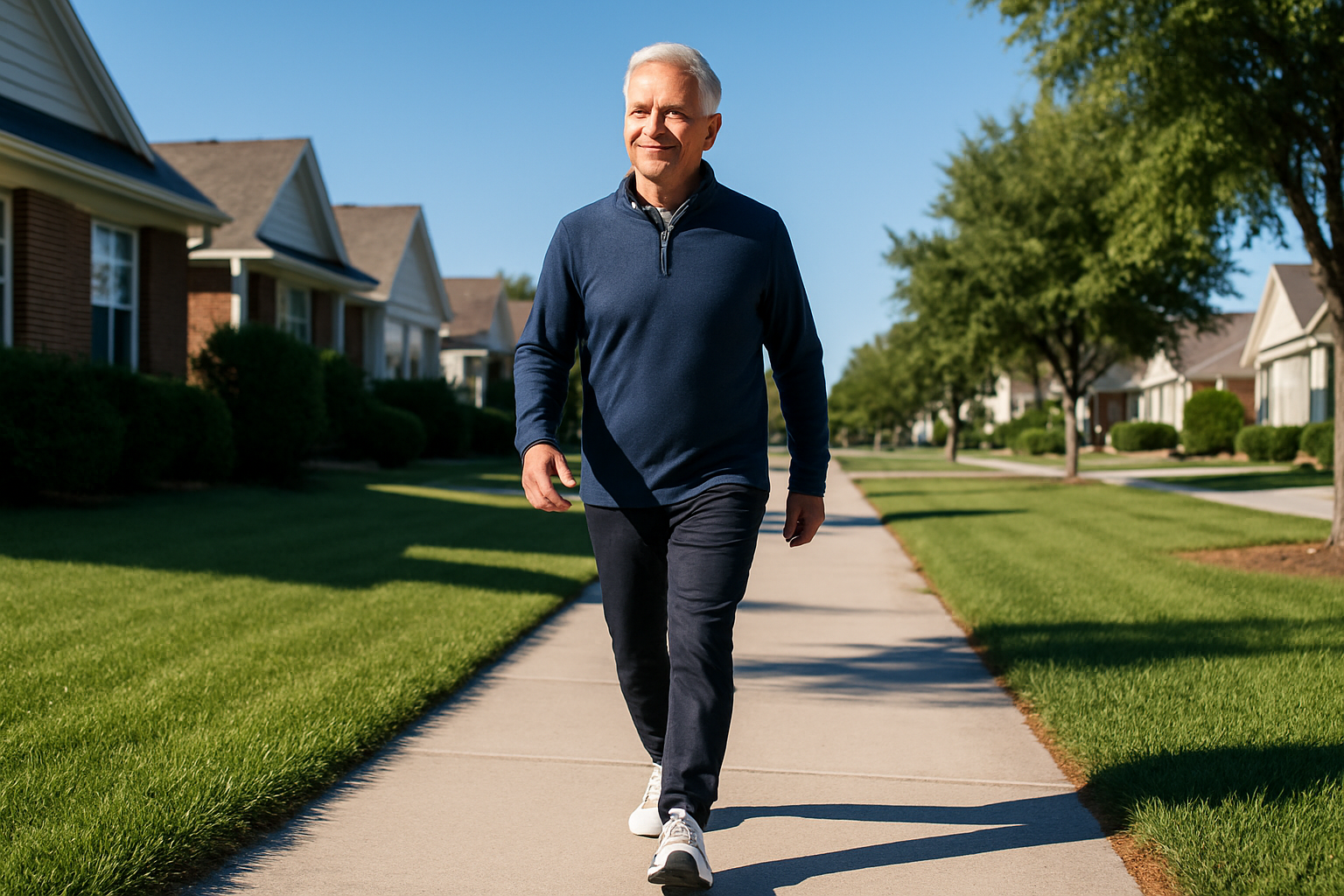
Not all walking is equal. Brisk walking shows stronger cardiovascular benefits than a slow stroll. The simplest check is the talk test: at a brisk pace, you can hold a conversation but not sing comfortably.
For most adults, brisk walking lands around 3 to 4 miles per hour. If brisk feels too hard right now, walk at whatever pace you can sustain. Build up gradually. Any walking beats no walking.
How to Make It Stick
The patients who walk consistently are the ones who pair it with something they already do. A few patterns I have seen work:
- A 20-minute walk right after morning coffee, before the day’s distractions hit.
- Walking phone calls instead of seated ones.
- Parking at the far end of every lot.
- Walking with a spouse or neighbor at the same time each day. Accountability matters.
- Three 10-minute post-meal walks to total 30 minutes.
The goal is not to redesign your life. It is to layer movement onto what your day already looks like.
Related Reading
Walking sits inside a broader conversation about physical activity. Two related posts on this site cover the bigger picture:
- How Much Exercise Do You Actually Need? A Cardiologist’s Perspective
- Why I Send Patients to the CDC for Exercise Advice
If you are starting a walking routine, or trying to make one stick, bring the specifics to your next visit. We will tailor the plan to your cardiovascular situation. You can also contact our office if you do not have a follow-up scheduled.